English
The Master 2 in Microfluidics & Miniaturization trains scientists and engineers, in one year, to design, fabricate and use devices that handle fluids at the micrometer scale.
At the interface of physics, chemistry, biology and engineering, these “labs on a chip” serve both fundamental research and concrete applications: diagnostics, drugs, chemistry, energy.
Supported by the Institut Pierre-Gilles de Gennes (IPGG), the program combines courses, intensive lab classes and a research internship. It is built around research, innovation and industrial applications, and is one of the fastest ways into the microfluidics start-up ecosystem.
How to apply Curriculum & faculty
Two Master’s degrees, one program
The program is part of two internationally recognized degrees. Your home degree depends on your background.
Physics of Complex Systems
For physics backgrounds.
Sorbonne Université, Université Paris Cité, Université Paris-Saclay.
Materials Science and Engineering
For chemistry and biology backgrounds.
Université PSL.
Why join?
A unique combination of advanced scientific training, hands-on technology and exposure to innovation. You learn to think like a scientist and an engineer while solving real problems.
- Interdisciplinary teaching by internationally recognized experts in physics, chemistry, biology and engineering
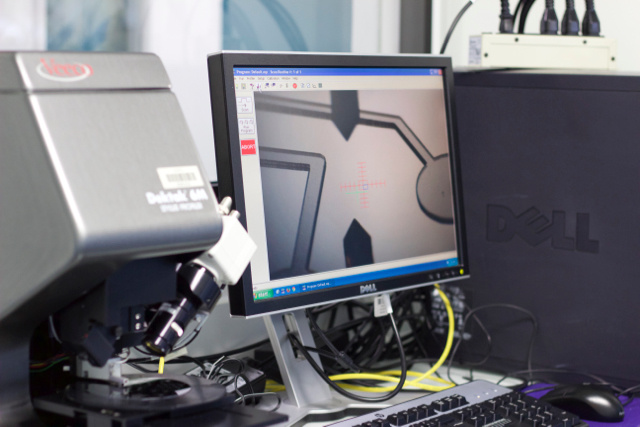
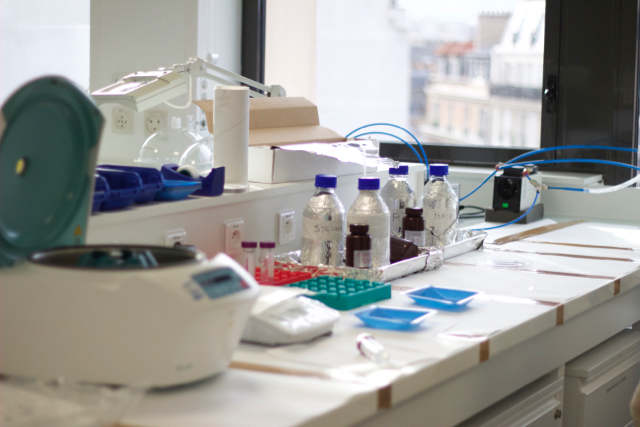
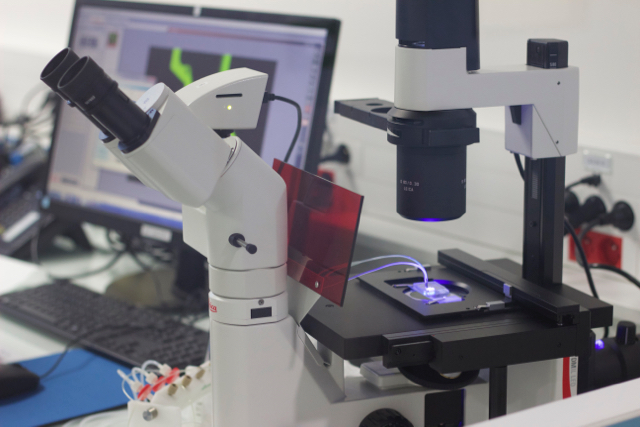
- Hands-on training from the first weeks, on the IPGG technological platform and in academic and industrial labs
- Innovation culture: regular meetings with start-ups and industrial partners, many of which grew out of IPGG labs
How the year works
September to January
Semester 1: courses and project. Lectures and intensive lab classes, plus a short research project in an IPGG lab.
February to June/July
Semester 2: Master’s thesis. A 5 to 6 month research internship in academia or industry, in France or abroad, defended before a jury.
Core topics: microfabrication and surface functionalization, microscale hydrodynamics and soft matter, lab-on-a-chip and flow chemistry, droplet biochemistry, single-cell analysis and organ-on-chip. See the full curriculum and faculty.
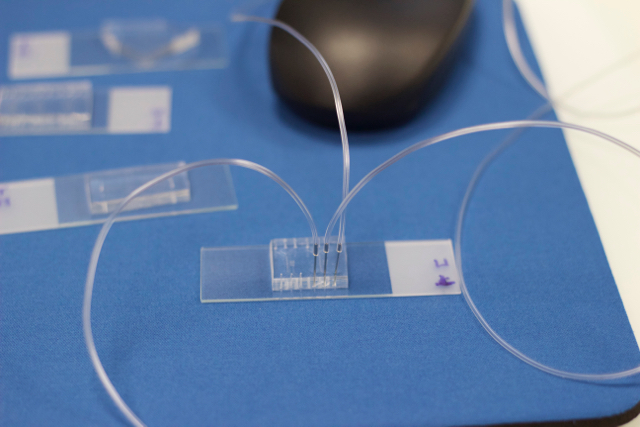
Innovation and industry
Microfluidics drives deep-tech entrepreneurship. The program has close ties with the PC’Up incubator and the Tremplin Carnot IPGG TT technology transfer office. Students meet start-ups and industrial partners during regular events.
A unique location
You study in the heart of Paris, in the Latin Quarter, a historical hub of French science. The IPGG campus is within walking distance of Sorbonne Université, Institut Curie, École Normale Supérieure, Chimie ParisTech and ESPCI Paris, and Paris gives direct access to Université Paris-Saclay, Université Paris Cité and major innovation clusters.
Useful links
- Official website: microfluidics-master.fr
- Institut Pierre-Gilles de Gennes: institut-pgg.fr