
Microfluidics ?
Microfluidics is the science and technology of fluids in miniaturized systems, from droplets a few micrometers wide to complex organ-on-chip models. It sits at the crossroads of physics, chemistry, biology and engineering.
By combining precise flow control, advanced microfabrication and interfacial science, it offers a platform to mimic biological processes, accelerate chemical reactions and design new materials at the mesoscale. Its applications range from drug discovery and diagnostics to environmental monitoring, materials synthesis and sustainable energy.
Microfluidics in action
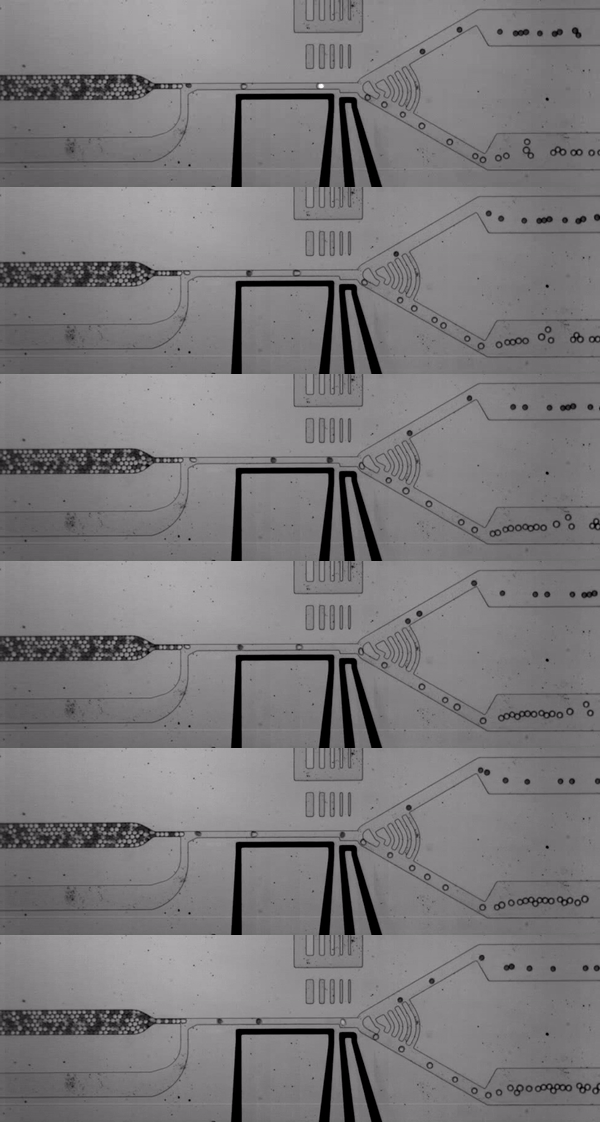
Droplet sorting
A device routes droplets according to their fluorescence, which reflects the progress of a biochemical reaction encapsulated in each droplet.
Source: LBC, ESPCI
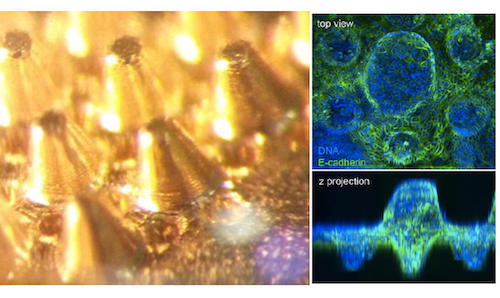
Organ-on-a-chip
Devices that reproduce the structure and function of living tissues. Example: gut-on-a-chip, to model microbiota interactions, nutrient absorption and inflammation.
Goal: replace or complement animal testing and provide tools for personalized medicine.
Source: Le Journal du CNRS
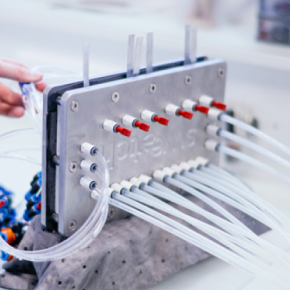
Blue energy
Harvesting renewable energy from salinity gradients with micro- and nanofluidic channels. Example: nanoporous membranes that control ion transport for efficient energy conversion.
Goal: sustainable, carbon-free energy from natural concentration gradients.
Source: Le Journal du CNRS
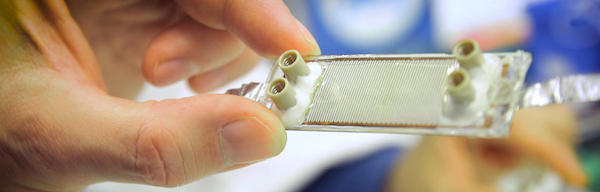
Flow chemistry
Chemical reactions in continuously flowing microreactors instead of batch flasks: continuous synthesis of pharmaceuticals with high precision and safety, and photochemical or electrochemical processes with efficient light or current delivery.
Goal: make chemistry safer, faster and more sustainable.
Source: Le Journal du CNRS (video)
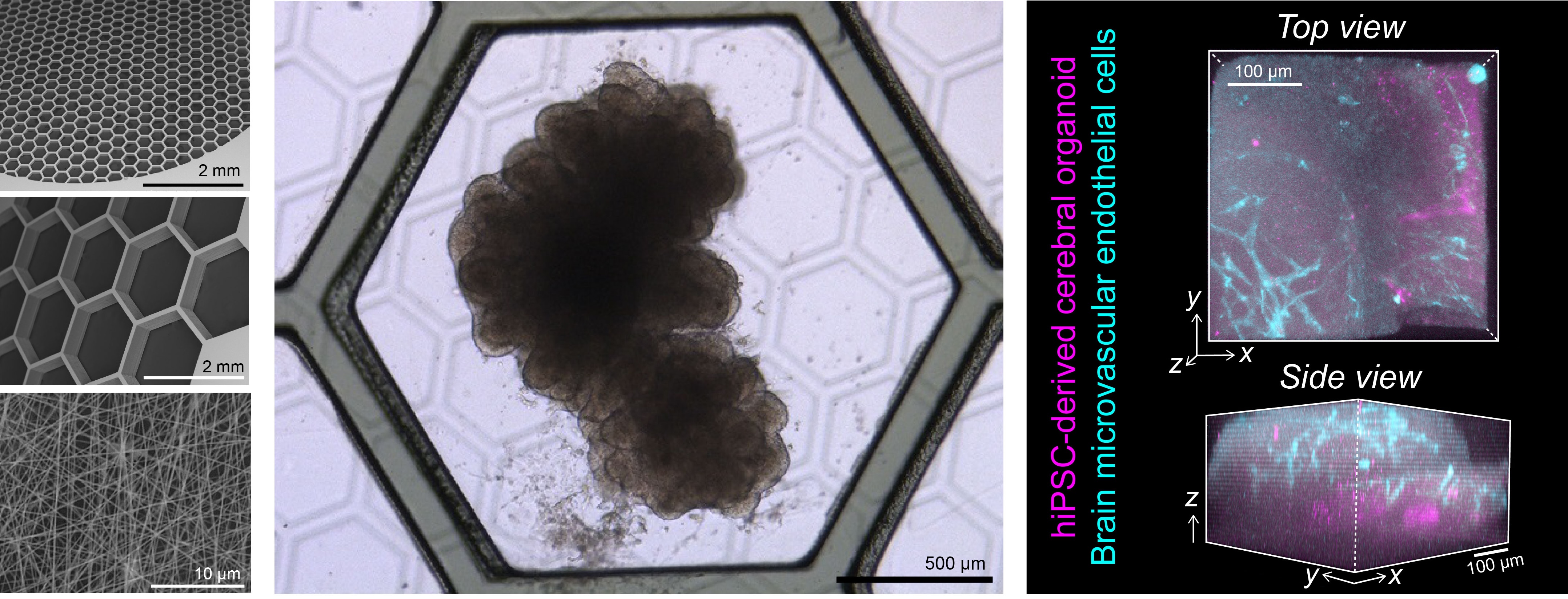
Organoids and microfluidics
In situ differentiation and vascularization of an array of cerebral organoids on a micro-/nano-engineered substrate reversibly integrable into a microfluidic device.
Goal: To develop a brain-on-a-chip platform integrating vascularized cerebral organoids with perfusable microvessels exposed to controlled microfluidic flow, providing a physiologically relevant model for investigating brain development and drug delivery.
Source : A. Yamada (CPCV, ENS)
Introductory videos
Three short videos (in French) from the Aventures Microfluidique series.
#1 The physics of the microscopic world
#2 Creating a micrometric world
#3 Microfluidic chips